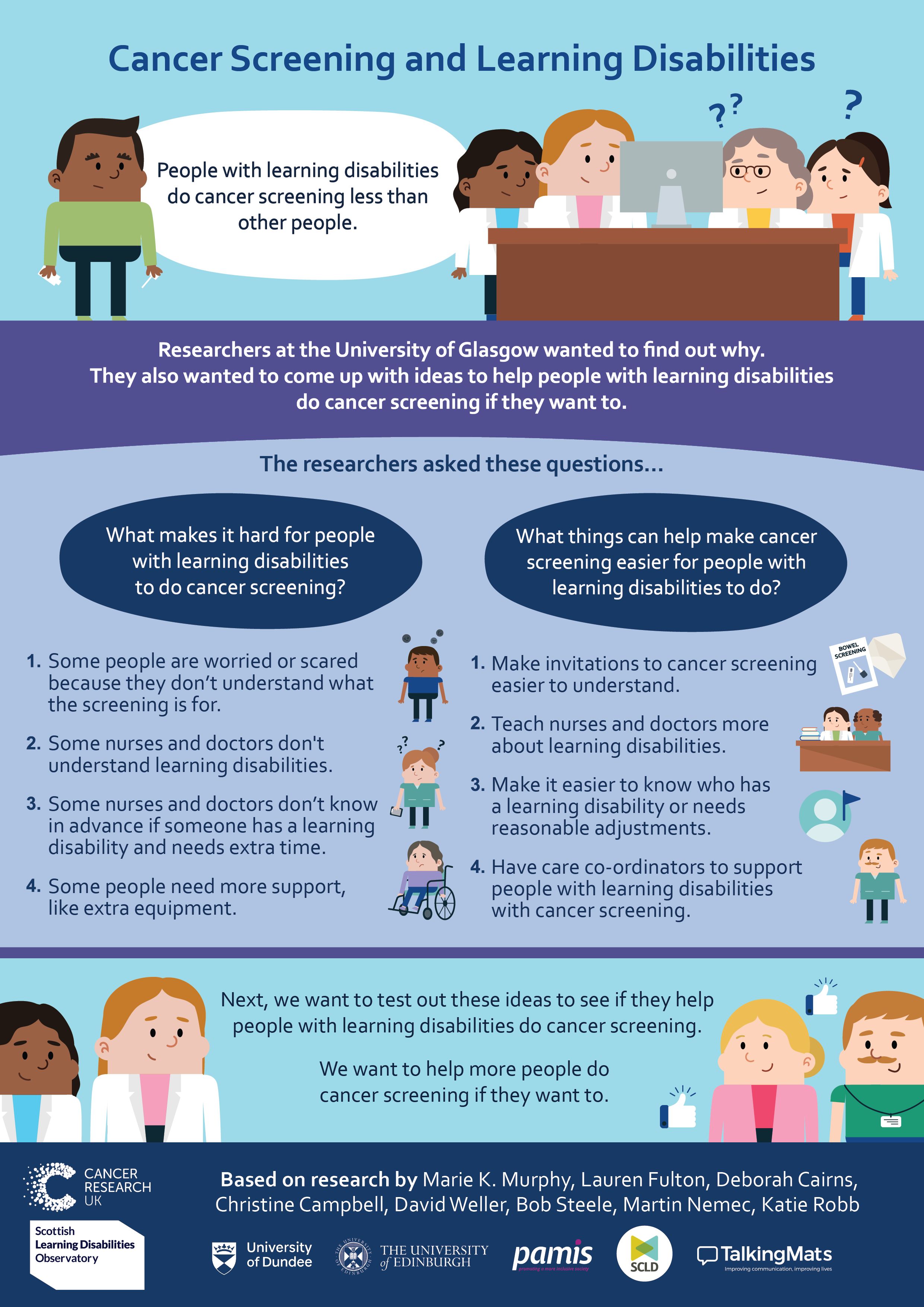
Stage 1: The systematic review included 32 reports that covered 30 different interventions. Their effectiveness was mixed, but multi-strategy interventions targeting access barriers across individual, provider, and organisational levels were more effective.
Stage 2: Twenty-nine people with learning disabilities, nine carers/supporters, and 55 people in relevant professional roles took part in semi-structured interviews. Barriers and facilitators to screening were identified within six themes: automatic motivation (e.g. fear), reflective motivation (e.g. weighing up potential harms), psychological capability (e.g. accessible information), physical capability (e.g. reliable transportation), social opportunity (e.g. support), and physical opportunity (e.g. accessible equipment).
We combined Stage 1 and Stage 2 findings to develop recommendations to increase cancer screening uptake.
Stage 3: Seven people with learning disabilities, six carers/supporters, and 12 professionals attended the workshops. We presented the recommendations to improve cancer screening uptake at the workshops and asked participants to provide feedback. Through discussion, four key areas were identified for intervention development: 1) accessible invitation and results letters, 2) educational resources for healthcare providers, 3) systems to identify people with learning disabilities, and 4) patient navigation.
Stage 4: We held two focus groups of three participants with learning disabilities and one focus group of eight people in relevant professional roles to refine the interventions from Stage 3 to improve bowel screening access among people with learning disabilities.